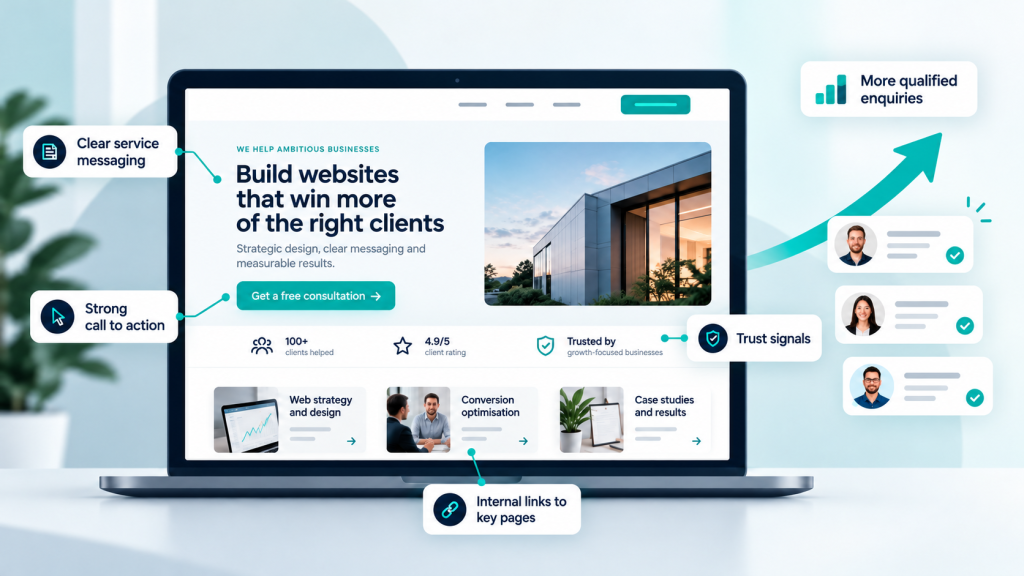
A website can look successful in a traffic report and still leave a business short of useful enquiries. Visitors arrive, a few forms are submitted, and the team remains unsure whether the marketing is helping.
My first question would be where the difficulty begins. Are unsuitable people arriving? Are relevant visitors unable to understand the offer? Or are good enquiries becoming difficult to identify once they reach the business?
Those situations need different responses. Before commissioning a redesign or increasing advertising spend, work through the journey in order.
Define a useful enquiry before judging the numbers
Start with the people who handle incoming enquiries. Ask them what makes a conversation worth progressing.
For a service business, that might involve the service requested, location, project scope, timing and whether the business can realistically help. There is no need to turn the definition into an elaborate scoring system. A short, agreed description is enough to start.
For example, a fictional commercial maintenance company might define a suitable enquiry as one from an organisation in its service area seeking planned maintenance. Domestic repair requests would belong in a different category.
That distinction changes how you read the report. Twenty enquiries containing fifteen unsuitable requests tell a different story from twenty enquiries containing fifteen potential projects.
Keep an “unknown” category too. An enquiry with missing information has not yet been assessed; it should not automatically be treated as unsuitable.
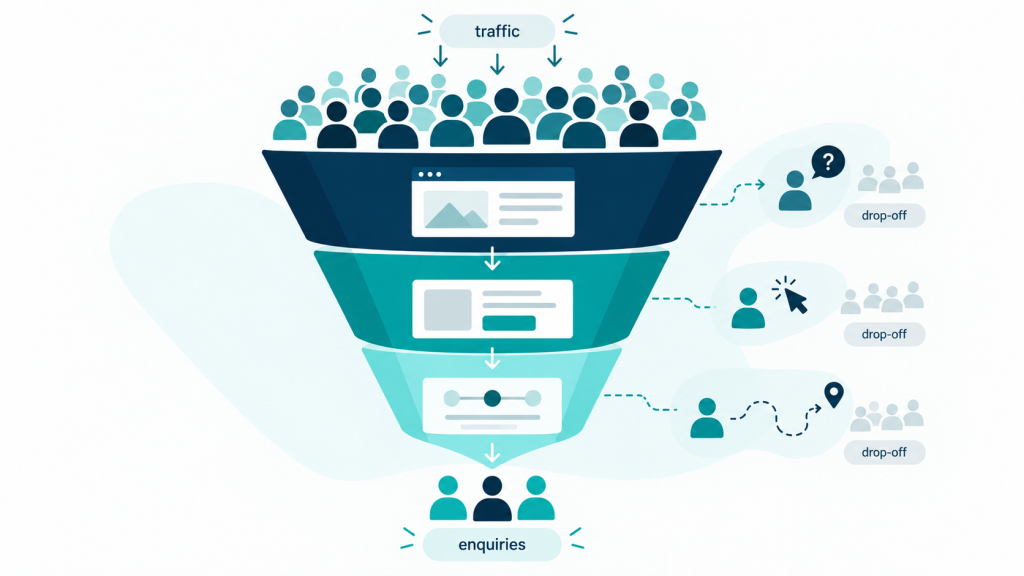
Check why visitors are arriving
Look at the routes into the pages that matter: search, advertising, LinkedIn, referrals and direct visits. Where information is available, compare the visitor’s apparent need with the page they reach.
An advert offering emergency support creates an expectation of immediate help. If the page describes a planned consultancy project, the mismatch begins before the form.
The same issue can occur when an informative article attracts readers whose needs sit outside your commercial offer. That does not make the article useless. It means its traffic should be judged against its purpose rather than treated as ready-to-buy demand.
Choose a small sample of recent journeys to investigate. Ask what was promised, what was delivered on the page and whether the next step made sense.
Test the page as a first-time customer
Open one priority service page on a phone. Read the opening section without relying on your knowledge of the business.
You should be able to explain what the service does, who it helps and whether there are important limits on scope or location.
Then look for the information that supports a decision. A relevant project example, a clear process and answers to common questions can help someone judge suitability. Put that information close to the point where it becomes useful.
A fictional engineering consultant, for example, might explain the types of project supported, the information needed for an initial discussion and what happens after an enquiry. Those details make the first step easier to understand.
Avoid trying to answer every possible question in the opening paragraph. Give the reader a clear starting point, then organise the supporting detail into a sensible sequence.
Look for friction in the enquiry process
Complete the form yourself and check what happens afterwards.
Is every field necessary at this stage? Are labels clear? Can someone correct an error without losing their work? Does a successful submission produce a visible acknowledgement? Does the enquiry reach the right person?
An overly brief form can generate incomplete requests, while an overly demanding one can discourage relevant people. Decide which information the team genuinely needs to take the next step.
For the maintenance example, service type and postcode might help establish suitability. A long technical questionnaire may be better saved for a later discussion.
Also check alternative contact routes. If visitors can call or email, those enquiries need a place in the review. Looking only at form submissions can leave part of the journey invisible.
Include follow-up in the diagnosis
Marketing reports often stop at the point of submission. The business experience continues.
Establish who takes ownership, how enquiries are categorised and where the outcome is recorded. A short feedback routine can reveal whether the problem is unsuitable demand, incomplete information, availability or difficulty contacting the person.
Keep these reasons separate. They imply different improvements. Unavailable appointments are an operational constraint; repeated requests for an unoffered service may indicate a messaging problem.

Choose one change and a fair review
Write down the observed problem, the proposed change and what you expect to learn.
For example: “Several enquiries request domestic repairs. Clarify that this page covers commercial maintenance, then review the mix of enquiries received.”
Record when the change went live and any other changes that could affect the result. Compare similar periods, allow for the time needed to collect meaningful evidence and avoid treating a handful of enquiries as a settled pattern.
Your first improvement should address the clearest problem in the journey. That creates a better foundation for deciding whether the next investment belongs in traffic, content, measurement or follow-up.
If you need help identifying that priority, my website and e-commerce support covers page clarity and customer journeys. You can share the problem you are trying to solve, along with what you currently know about your enquiries.